
Published · Last updated:
This guide reflects US occupational data from the Bureau of Labor Statistics, the 2026 U.S. Houzz & Home Study and 2026 Google Ads benchmarks as of October 2026. It is general marketing guidance for US interior design firms, not legal advice. Houzz Pro prices are not quoted here; check Houzz's own pricing page for current plans.
How Interior Design Firms Win Larger Projects: Houzz, Instagram, Referrals and a Portfolio Site Compared

Interior design marketing for larger projects is a different job from marketing for volume. In the 2026 U.S. Houzz & Home Study, 29% of renovating homeowners hired a general contractor and 8% hired an interior designer, and the 90th percentile of renovation spend reached $150,000 in 2025. [2] Referrals from builders and architects and a portfolio site that pre-qualifies inquiries reach that client most directly; Houzz and Instagram mainly build reach.
- Interior designers held about 97,100 jobs in 2025, and 26% were self-employed, the second-largest group after specialized design services at 30%. Most firms are small, so time spent on a channel is the real budget. [1]
- The large-project client exists. Houzz reports median renovation spend held at $20,000 in 2025 while the 90th percentile rose 7%, from $140,000 to $150,000. [2]
- Builders reach homeowners first. General contractors were hired by 29% of renovating homeowners in 2025 and interior designers by 8%, which makes contractors and architects the referral partners worth the most time. [2]
- Gifted furniture and paid brand collaborations need a disclosure when you promote the brand, under the FTC Endorsement Guides, and it has to appear where people will see it, not deep in a caption. [4]
- Most Ambrose clients invest roughly $1,200 to $4,000 a month in marketing, often across more than one channel. Book a free consultation and we will look at which channel brings your firm its larger projects before we talk about anything else.
Two of the top-ranking interior design marketing guides read for this post, from Neil Patel and Bonsai, recommend social media, content, email and paid advertising for every firm alike, and neither separates the advice by project size. That advice is not wrong, but it is written for volume. A firm that wants fewer, larger projects needs to know which channel actually reaches the homeowner planning a whole-home renovation or a second home, and which channel mostly produces inspiration saves and small consults.
This guide compares Houzz, Instagram and Pinterest, referrals and a portfolio website by the project each one tends to bring, using public data on how the profession is structured and how renovating homeowners hire. Where a number is not public, it says so. There is, for example, no independent study read for this guide that measures what a Houzz profile returns for a design firm.
How the Interior Design Profession Is Structured and Why It Changes Your Marketing
The interior design profession is small and fragmented, and that shapes every marketing choice. The Bureau of Labor Statistics counts about 97,100 interior designer jobs in 2025, with 26% self-employed and 30% in specialized design services, and projects 3% growth from 2025 to 2035. [1] In a field of small studios, the scarce resource is the principal's time, not the ad budget.
The BLS description of the work is blunt about marketing. It says interior designers spend much of their time soliciting new clients and new work, and that they must work closely with architects and builders to determine the design of an interior space. [1] New business is part of the job, and the people already at the table on a large project are architects and builders, which is where referral marketing starts.
The hiring data from the homeowner side points the same way. The 2026 U.S. Houzz & Home Study, based on more than 20,000 US homeowners, reports how renovating homeowners hired in 2025: [2]
| Professional hired in 2025 | Share of renovating homeowners |
|---|---|
| At least one professional of any kind | 91% |
| General contractor | 29% |
| Builder | 13% |
| Interior designer | 8% |
| Architect | 8% |
| Kitchen and bath designer | 7% |
| Design-build firm | 5% |
| All design-related professionals combined | 22% |
Two readings follow. General contractors were hired by 29% of renovating homeowners and interior designers by 8%, so a contractor meets more than three times as many renovating households as a designer does. [2] And at the top of the market, project size is real: Houzz reports median renovation spend held at $20,000 in 2025, while the 90th percentile reached $150,000, up 7% from $140,000 in 2024. [2] Houzz notes that these medians are not adjusted for inflation.
If your firm wants help mapping its own sources, our interior design marketing agency service starts from that list of past projects rather than from a channel.
Houzz for Interior Designers: What a Profile Does and Does Not Do for Larger Projects
A Houzz profile is a discovery and proof channel: homeowners browse project photos, follow them to a designer's profile and read reviews. Houzz's own 2020 guide says home remodeling and design professionals can get a profile for free, and that sponsored placement is part of its paid local advertising. [6] What no public source read for this guide shows is how often a profile turns into a large project.
The profile itself is the part every firm can control. Houzz's own Pro Learn guide, dated 2020, describes photos linking directly to the pro's profile, where homeowners can view more of that pro's work, and it advises firms to ask past clients for reviews. [6] The same guide says Houzz search detects where a homeowner is located, so service area and project location matter on the profile as much as on your website.
This guide does not quote Houzz Pro prices: Houzz's pricing page could not be opened when this guide was prepared, and plans change, so read them on Houzz's own page the day you decide. Judge any paid plan by the same test as every other channel in this guide: how many inquiries it produced in the project size you want, not how many leads it produced in total.
No independent study of Houzz return for design firms turned up in the research for this guide, so the evidence has to come from your own records. Tag every inquiry that names Houzz, note the project scope at first call, and review the list after six months. A profile that brings several small consults and no whole-home projects is still useful as proof, because a referred prospect may check it, but it is not your large-project channel.
Reviews belong in the same plan. The FTC final rule announced August 14, 2024, prohibits businesses from creating or selling fake reviews and from offering compensation or incentives conditioned on a review expressing a particular sentiment, and it allows the agency to seek civil penalties against knowing violators. [5] Ask every finished client for an honest review, with nothing conditioned on what they say.
Not sure which channel brought your last three larger projects? Book a 15-minute consult and we will trace them with you before you spend another hour on a platform.
Book Your Free Consultation →Instagram and Pinterest: Inspiration Traffic Is Not Inquiry Traffic
Inspiration traffic is attention from people collecting ideas: saves, likes, follows and profile visits. Inquiry traffic is a person with a property, a timeline and a budget asking whether you are available. Instagram and Pinterest produce a great deal of the first and some of the second. For a firm chasing larger projects, their job is proof and recall, and the measure is inquiries, not followers.
The two kinds of traffic reward different content. A single styled vignette can draw many saves from people who are collecting ideas, not hiring. A full project story, with the before, the plan, the trades involved and the finished rooms, earns fewer saves but answers the questions a homeowner planning a large project actually has. The second kind of post is also the one an architect or builder can forward to a client.
Count what you can tie to a real conversation: direct messages that turn into a call, inquiries whose form answer names Instagram or Pinterest, and referrals who mention they saw your work there. If a platform produces reach and no qualified inquiries over two quarters, keep posting at the pace that maintains proof and move the saved hours to referral partners.
Gifted product and trade collaborations add a compliance step that neither ranking guide read for this post mentions. The FTC Endorsement Guides FAQ says that receiving a free product to review requires a disclosure no matter how the product was delivered, and that a payment or anything of value given to tout a product usually requires one too. [4] For a designer, that covers gifted furniture, lighting or textiles, brand-paid trips and paid collaborations.
Disclose where people look
The FTC notes that Instagram truncates longer descriptions to the first two or three lines, so a disclosure buried later in a caption is easy to miss. It also says a disclosure superimposed over the picture may be needed. [4]
Put it at the start
The FAQ says a disclosure in the middle or at the end of a post is easier to miss, and that "#ad" at the beginning of a post is probably as effective as similar wording. [4]
Hold your agency to it
The FAQ says a company is ultimately responsible for what others do on its behalf, and that advertisers need reasonable programs to train and monitor the people who promote them. [4]
Write it into collaboration terms
Agree on the disclosure wording with the brand before the post goes live, and keep a copy of the agreement with the project record.
Referrals From Architects, Builders and Past Clients: How to Make Them Repeatable
Referrals are the large-project channel most firms leave to chance. In the 2026 Houzz study, general contractors were hired by 29% of renovating homeowners, builders by 13% and architects by 8%, against 8% for interior designers. [2] The professionals who meet the client first are the ones to cultivate, and a referral program turns occasional introductions into a pattern you can measure.
The BLS notes that interior designers must work closely with architects and builders to determine the design of an interior space. [1] Every finished project is evidence for the next referral, but only if the partner can find it and send it to the next client.
List your partners by project
For each of your last ten larger projects, write down which architect, builder or past client introduced it, if any. That list is your referral channel's real performance.
Credit partners on project pages
With permission, name the architect and builder on each project page and link to them. It gives partners a reason to share the page and gives prospects a fuller picture of the team.
Make the next referral easy
Give partners one link to send: a project page or a short page with your process and how to start.
Ask past clients at the right moment
Ask for a referral or review after installation and again after the first season in the home, and never condition anything on what they say. [5]
Record the source on every inquiry
Ask how the person heard about you on the inquiry form and in the first call, so referral volume and project size are both counted.
The Portfolio Site That Pre-Qualifies Larger Projects Before the First Call
A portfolio site that pre-qualifies does two jobs at once. It shows the scope of work a firm wants more of, and its inquiry form asks the questions that separate a whole-home project from a single room: project type, timeline and an investment band. Every other channel in this guide sends people to that page, so it decides how many of them become the right inquiry.
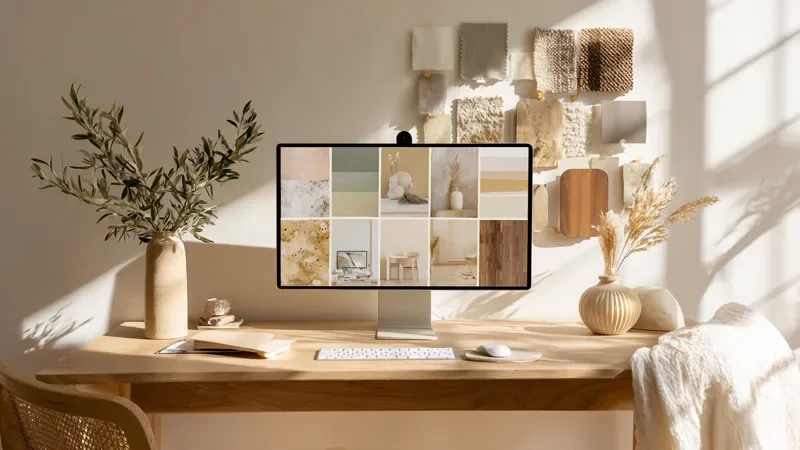
Project pages carry most of the weight. A gallery of finished rooms shows taste; a project page that states the scope, the location type and the team shows the kind of work you take on. Houzz describes a homeowner deciding on a pro by looking at more of that pro's work. [6] The same behavior on your own site is where pre-qualification happens, because the homeowner who sees three whole-home projects and no single-room refreshes understands what you do.
One example from Ambrose's own portfolio: the Kelly Adams Design Co. case study describes a boutique interior design firm based in Colorado, for which Ambrose built a visual identity, a custom website with a portfolio-forward layout and editorial typography, copywriting and on-page SEO. The case study states the goal as an intuitive, high-end digital experience from first click to inquiry. More examples are on our portfolio page, and the website design and development service explains how we build these sites.
Score your own site against ten checks. Each is a yes or no:
- Each project page states the scope: whole home, renovation, new build or single room.
- Each project page names the location type, such as primary residence, second home or commercial space, without exposing the client's address.
- Each project page is professionally photographed and every image has descriptive alt text.
- A process page explains the phases from first consultation to installation.
- The site explains how you charge, even if it shows no numbers.
- The inquiry form asks for the project timeline.
- The inquiry form asks for an investment band.
- The inquiry form asks how the person heard about you.
- Press, awards or trade recognition are shown with a link to the source.
- The site states how quickly you respond to an inquiry.
Count your yes answers and pick the band below. The scorecard shows what the score usually means and the three fixes that most raise inquiry quality at that level.
Portfolio Readiness Scorecard
This scorecard is an Ambrose house heuristic, not a study, and it does not estimate cost, inquiries or results. Count your yes answers to the ten checks above and pick the band. Source: the portfolio pre-qualification method in this guide.
The investment band question is the one firms hesitate over, and it is the one that saves the most time. A band, rather than an exact figure, lets a prospect answer without feeling priced and lets you route smaller projects to a shorter call. Our luxury website UX guide covers how high-end sites keep forms calm and brief, and five luxury branding mistakes covers the brand side.
Interior Design Marketing Channels Compared by Project Size
Compared by project size, each channel has a different job. Referrals and the portfolio site do the most for larger projects, Houzz and Instagram build proof and recall, Pinterest mostly builds inspiration reach, and paid search buys inquiries at a known cost. The table below is the Ambrose house framework, not a study; replace it with the source of your own last ten larger projects.
| Channel | Best for | Time cost to the firm | What to measure |
|---|---|---|---|
| Referrals from architects and builders | Whole-home and new-build projects, where partners meet the client first | Medium: relationships, project credits, follow-up | Introductions per partner, project size, win rate |
| Past-client referrals and reviews | Repeat and next-property projects | Low once the asking moment is scheduled | Referrals per finished project; honest reviews collected |
| Portfolio website | Pre-qualifying every other channel's visitors | High to build, low to maintain | Inquiries by stated band and timeline; inquiry-to-consult rate |
| Houzz profile | Proof for prospects who check you there; local discovery | Medium: photos, project details, reviews | Inquiries naming Houzz, by project scope |
| Proof and recall; project stories partners can forward | High: steady posting | Messages and inquiries that name Instagram, not followers | |
| Inspiration reach and long-lived image traffic | Medium: pins from each project | Site visits that reach a project page and inquire | |
| Paid search | Inquiries at a known cost when a market is searched | Low time, real media spend | Cost per qualified inquiry, not cost per lead |
Paid search deserves a number because it is the one channel here with public benchmarks. WordStream does not publish an interior design category, but its 2026 report shows the nearby categories are expensive per lead. Furniture had a median cost per lead of $106.70, the second highest of all industries after legal services, and a 2.99% conversion rate, among the three lowest. Real estate came in at $102.51 per lead, and home and home improvement at $90.92. [3]
Against the all-industry median of $66.69 per lead, the furniture figure is 60% higher. [3] The data covers 13,474 US search campaigns from April 1, 2025, to March 31, 2026. Treat those categories as neighbors, not as your number. For a firm seeking larger projects, the useful measure is cost per qualified inquiry, which means paid search only makes sense once the portfolio site and its inquiry form are doing their pre-qualifying work.
What the Ambrose Investment Range Covers for an Interior Design Firm
Most Ambrose clients invest roughly $1,200 to $4,000 a month in marketing, often across more than one channel. For an interior design firm, where a client lands in that range depends on three things: whether the brand and portfolio site need building or only refining, how many channels are in active use, and whether paid media is part of the plan.
That range is a total marketing investment, not a fee schedule. Each driver works like this for a design firm:
Brand and portfolio site
A firm whose site cannot yet show scope and pre-qualify inquiries starts there, because every other channel sends people to it.
Channels in active use
Referral partner materials, Houzz upkeep and Instagram project stories each take steady hours, so the number of channels you run changes the work.
Paid media
Media spend is the part that moves most. In the categories nearest to interior design, 2026 median cost per lead ran from $90.92 to $106.70. [3]
When you compare proposals from agencies, Ambrose included, ask each one to report inquiries by project size and source, not followers or impressions. If you want that report built for your firm, see how our interior design marketing service works, hire Ambrose Marketing directly or start with a free consultation.
Frequently Asked Questions About Interior Design Marketing

Is Houzz worth it for interior designers?
How do interior designers get high-end clients?
Do designers have to disclose gifted furniture on Instagram?
Should an interior design firm run Google Ads?
How much should an interior design firm spend on marketing?
References
- U.S. Bureau of Labor Statistics. Occupational Outlook Handbook: Interior Designers. page last modified 2026-08-27; read 2026-10-20. bls.gov
- Houzz (Mitchell Parker, Houzz Editorial Staff). 8 Home Remodeling Trends to Watch in 2026 (2026 U.S. Houzz & Home Study). 2026-04-22; read 2026-10-20. houzz.com
- WordStream by LocaliQ. Google Ads Benchmarks 2026: Competitive Data and Insights for Every Industry. last updated 2026-09-16; read 2026-10-20. wordstream.com
- Federal Trade Commission. FTC's Endorsement Guides: What People Are Asking. Guides revised 2023; no page date; read 2026-10-20. ftc.gov
- Federal Trade Commission. Federal Trade Commission Announces Final Rule Banning Fake Reviews and Testimonials. 2024-08-14; read 2026-10-20. ftc.gov
- Houzz Pro Learn (Leeyen Rogers). How Pros Use Houzz to Generate Leads. 2020-05-20, no updated date shown; read 2026-10-20. pro.houzz.com
Larger Interior Design Projects Come From the Channels That Meet the Client First
No single channel wins larger projects on its own. The pattern in the public data is that builders and architects meet renovating homeowners far more often than designers do, and that the top of the market is real: the 90th percentile of renovation spend reached $150,000 in 2025. [2] Referral partners and a portfolio site that pre-qualifies are the channels built for that client.
Keep Houzz and Instagram as proof, disclose every gifted piece and paid collaboration where people will see it, and measure every channel by inquiries in the project size you want. Then move your hours toward the sources that produced your last ten larger projects.
Ready to win fewer, larger projects?
We will trace where your best projects came from and show which channel deserves your next hour. You can also explore our interior design marketing and website design and development services, or hire Ambrose directly.
Book Your Free Consultation →This article is general marketing information as of its last-updated date, not legal advice. Survey and benchmark figures are third-party data, not a forecast or guarantee of your results; individual results vary. The channel comparison and the portfolio scorecard are Ambrose house heuristics, not studies. Platform policies and FTC guidance change, so confirm current rules at the source.